← All work

Halo

Agent design · Trust · Evaluation

Self-initiated design study · 2026

Designed and built a valuation workstation for loans backed by GPUs. The evidence base for a public comment to the CFTC.

Ask HaloDeal 0412 · 1,024 × H100

Responding · stress test

Stress this deal: next-gen a quarter early, rents fall 40%
get_deal(0412)run_stress(0412, rents −40%, next-gen −3m)

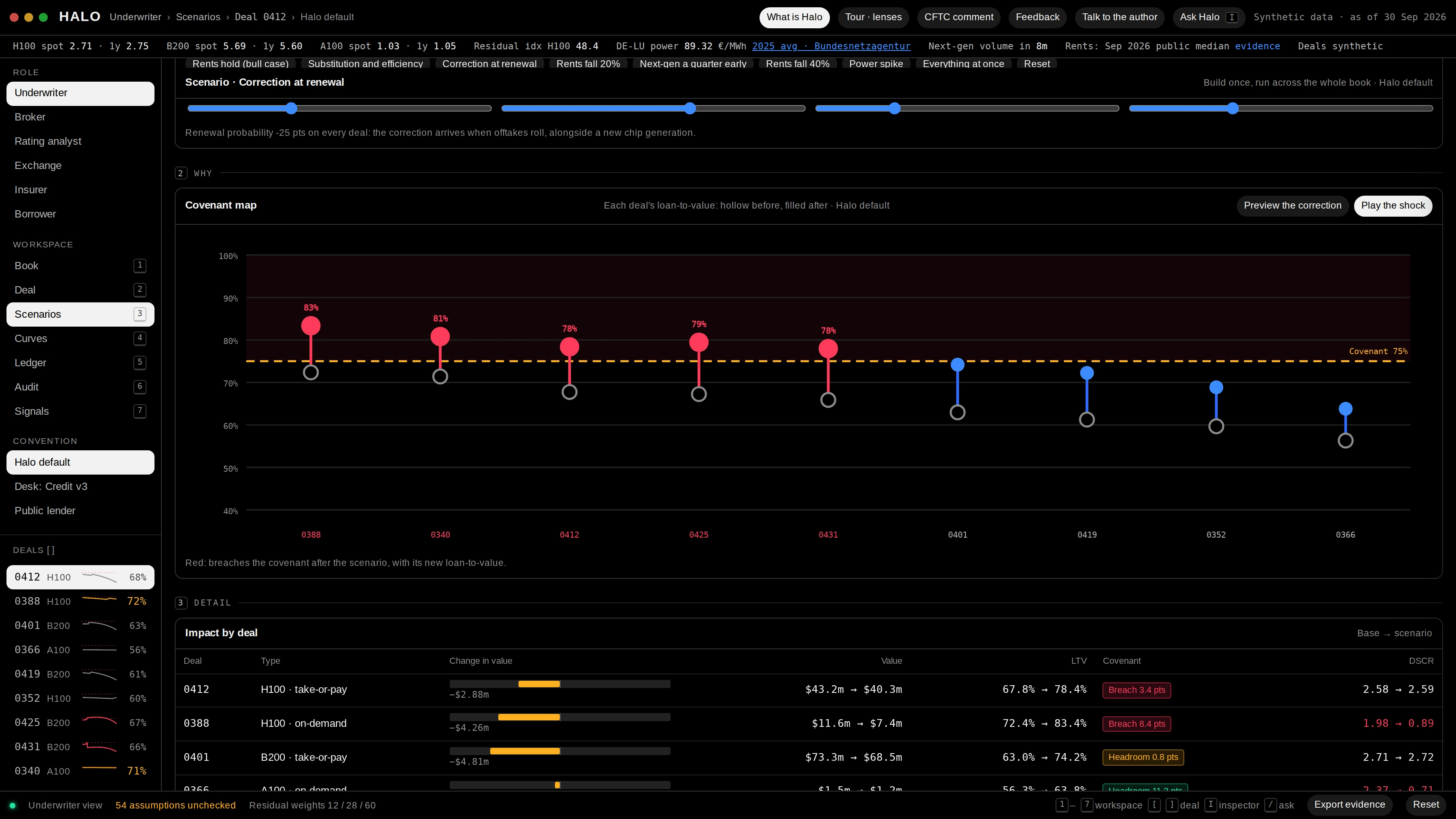
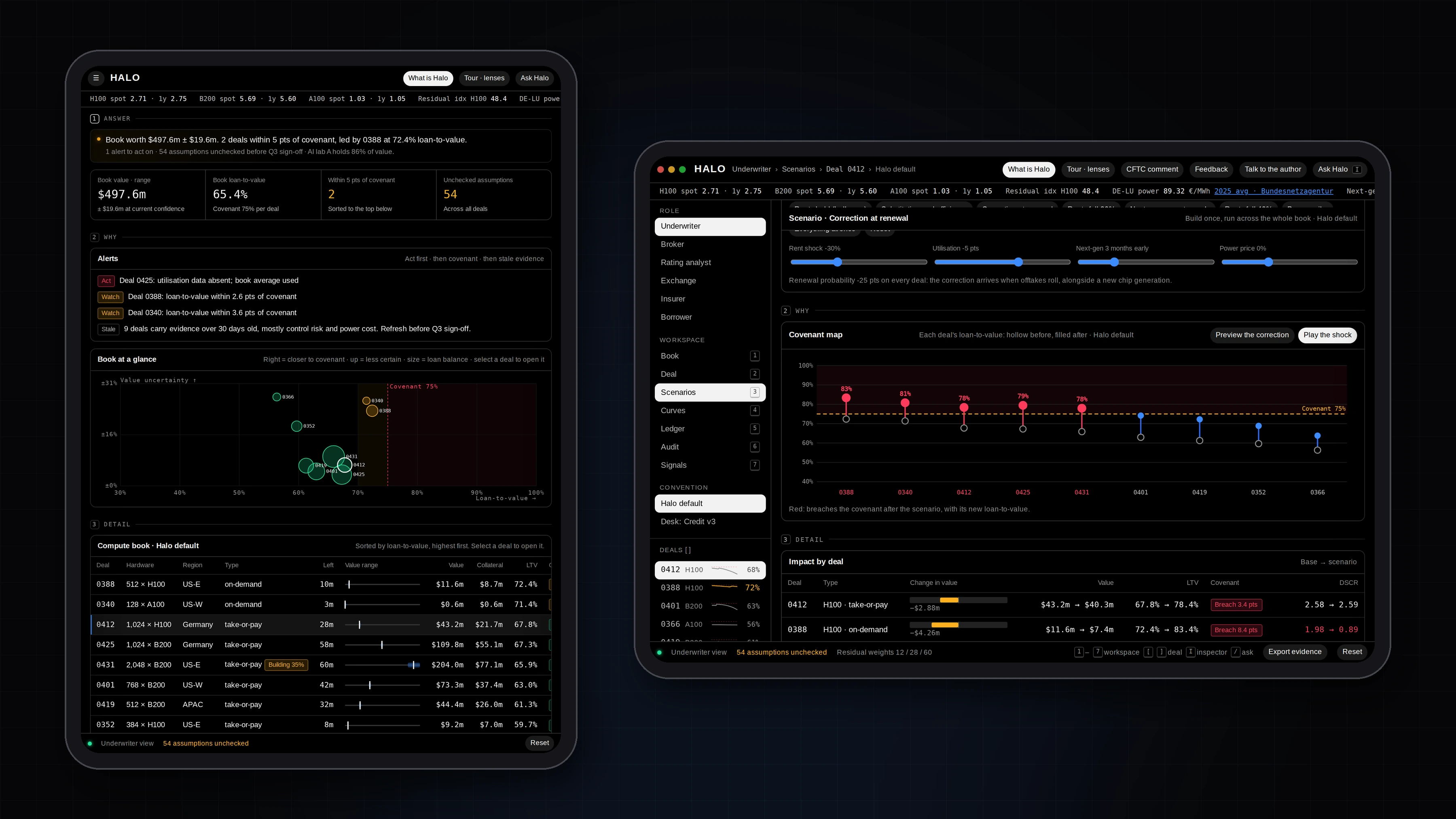
It breaches. Collateral falls from $21.72m to $17.79m, so loan-to-value rises from 67.8% to 82.7%, past the 75% covenant.

67.8%Covenant 75%82.7%

Debt service cover holds at 2.58× against a 1.15× floor. This is a collateral problem, not a cash-flow one.

Check next: the residual value method, 53% of the range and unchecked.

Ask HaloDeal 0412 · 1,024 × H100

Showing data · which method to trust

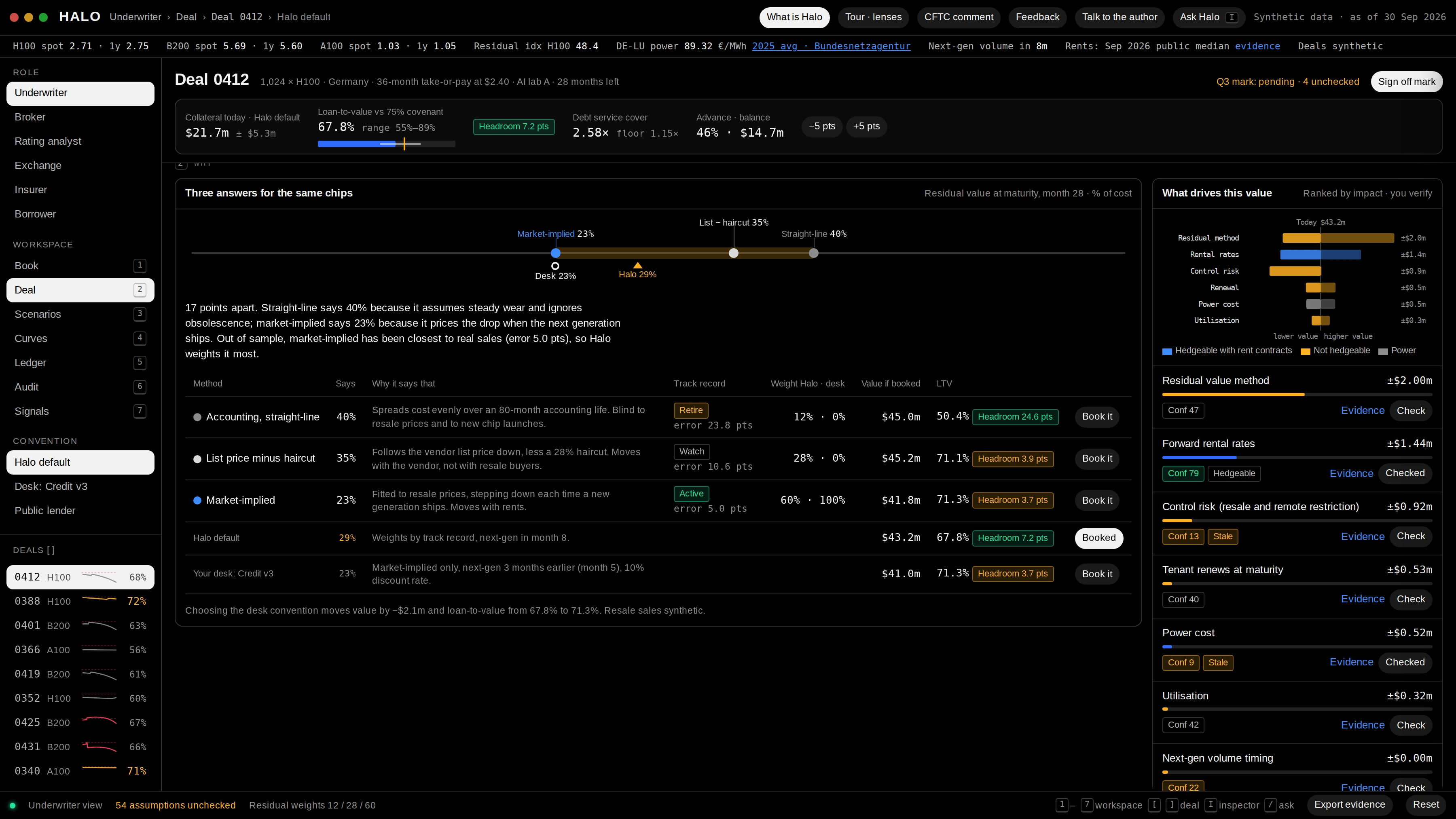
The methods disagree. Which one has been right?
get_deal(0412)get_track_record()

At maturity they are 17 points apart. Against resale sales, only one has held up:

Market-implied23%94% within 10 pts
List price − haircut35%50% within 10 pts
Accounting40%0% within 10 pts

Halo weights them 60 / 28 / 12 by that record, not by habit.

Check next: why accounting still carries 12% weight.

Ask HaloDeal 0412 · 1,024 × H100

Reading the news · counterparty risk

What does today’s CoreWeave news mean for this loan?
get_counterparty_events(0412)

CoreWeave · 14 Oct 2026

Unsecured notes traded near 14.8–14.9% yields, shares fell 16%, S&P rating B+.

Source: investingLive; CoreWeave Q2 results

If 0412’s tenant were CoreWeave, value falls $1.66m and debt cover slips from 2.58× to 2.53×.

That is tenant credit, not rent. A rent futures hedge would not cover it.

Check next: tenant concentration across the book before the Q3 marks.
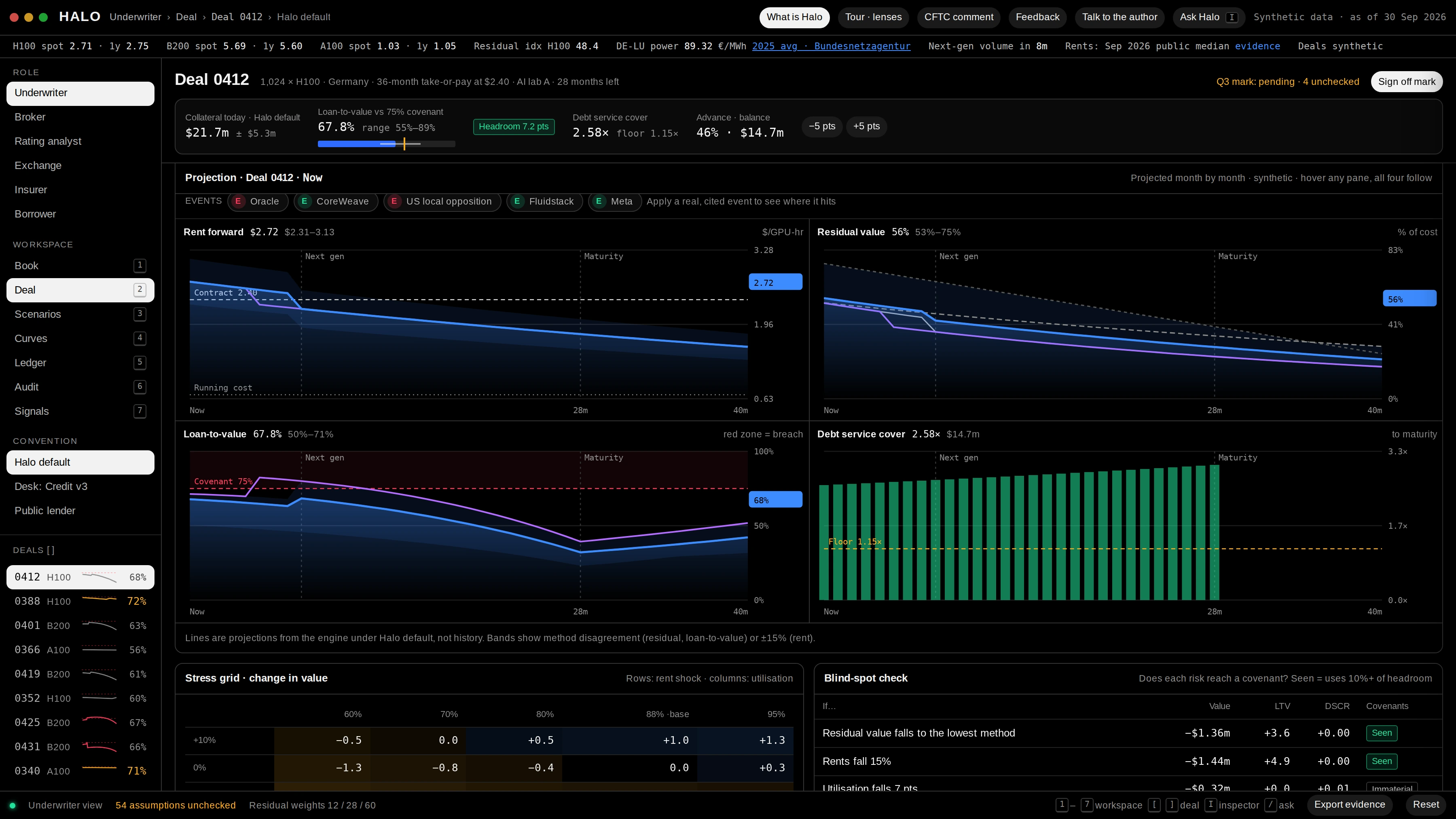
Ask Halo, replayed: every figure is read from Halo’s engine through its tools. Deal data is synthetic; the news event is real and cited.

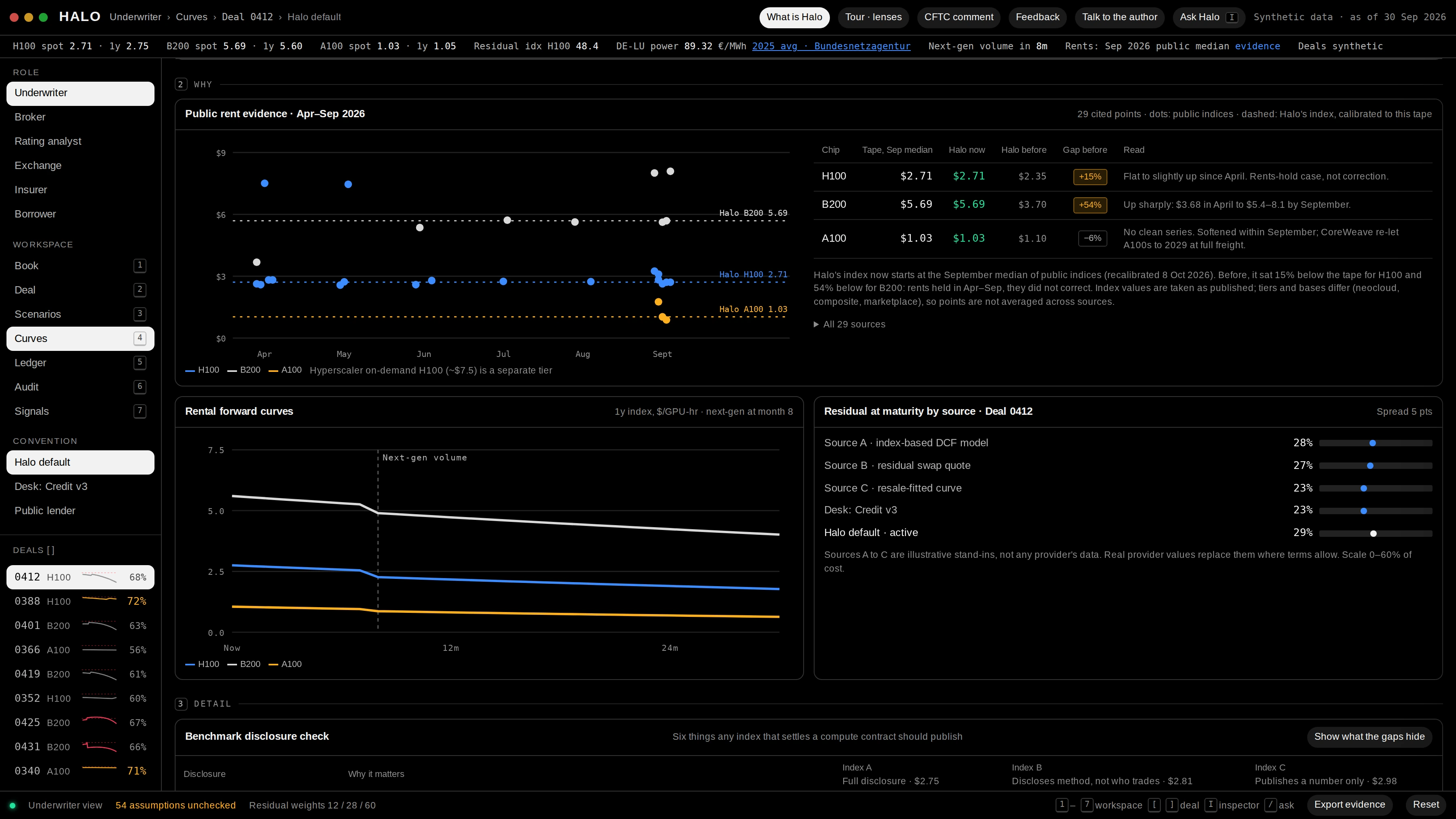
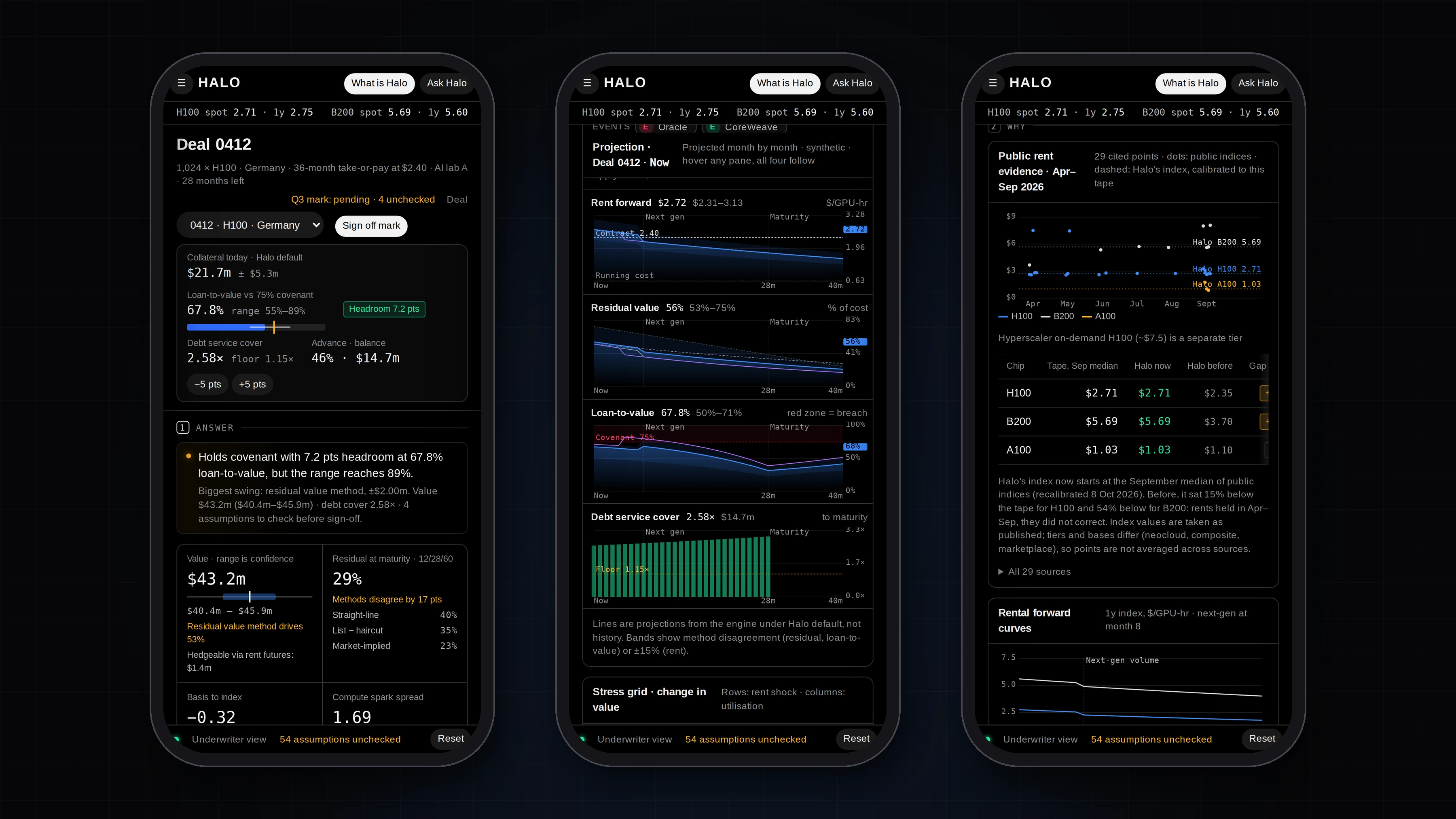
Halo deal view: one GPU loan projected month by month, rent, residual value, loan-to-value and debt cover in four linked charts, with the covenant and next chip generation marked

→ The system

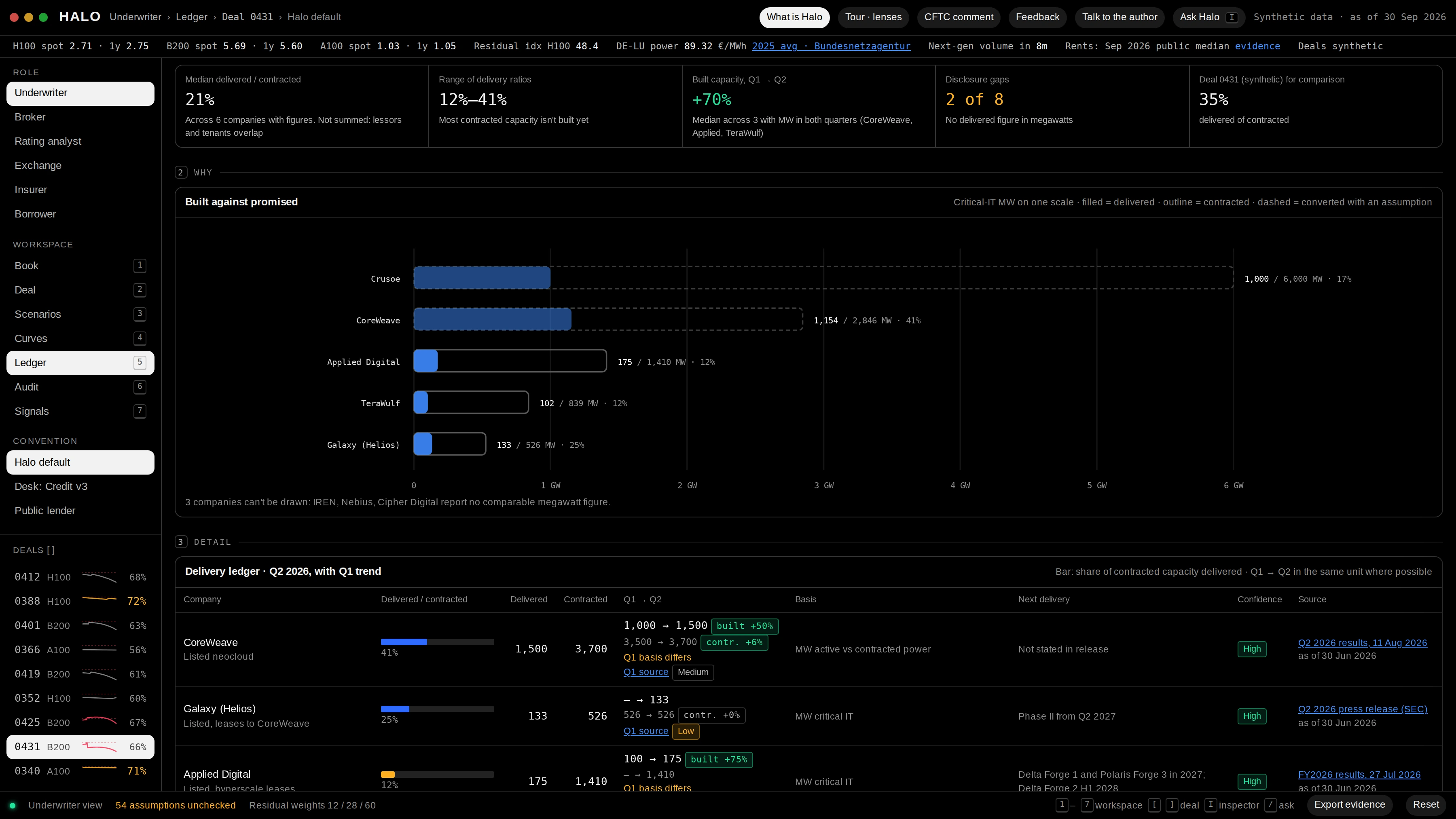
GPUs now back billions of dollars of loans, and compute has rental indices and futures. But no one agrees what the chips are worth when a loan ends: straight-line accounting, a list-price haircut and resale pricing can value the same H100s at 40%, 35% and 23% of cost, and the covenant moves with whichever one is booked. Halo is a working valuation and risk workstation that shows the range, the reasons and each method’s track record instead of one number, for six roles on one engine.

→ What I owned

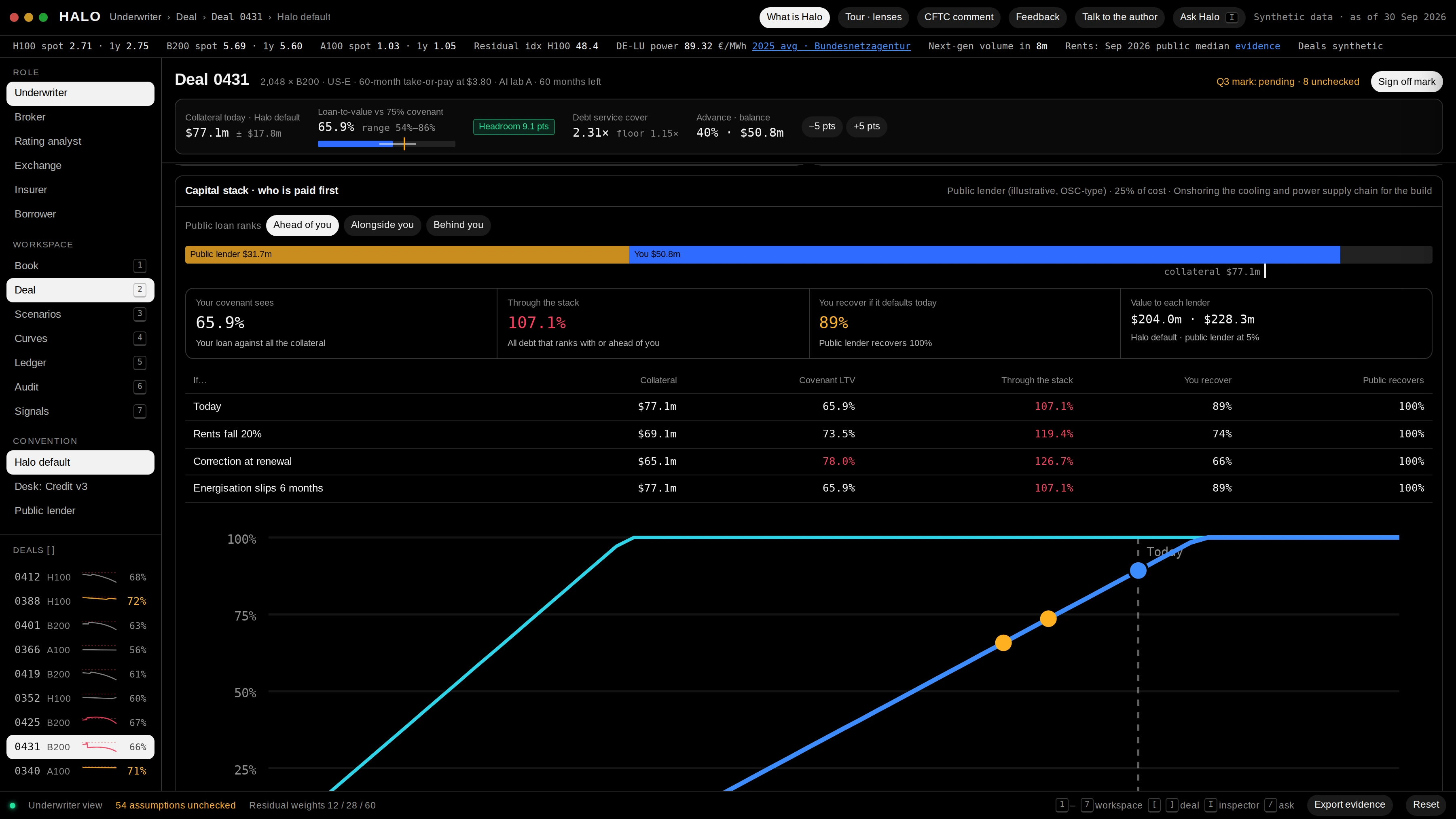
Designed and built it end to end: one valuation engine behind every screen, each view led by its answer, and conventions that make hidden judgements visible. Disagreement shown, not averaged; a track record for every method; the debt a covenant can’t see.

Anchored it in cited public data, from GPU rental indices to company filings, and made it the evidence base for a public comment to the CFTC on compute derivatives, October 2026.

→ The outcome

~4%

of a GPU lender’s value range a perfect rent hedge removes, the finding behind the CFTC comment

6

roles served by one engine, every figure traceable to its source

Next

Lloyds Banking Group × Spaces →